Training & Capacity Building

Building safer healthcare systems requires more than guidelines and publications. Healthcare professionals must be equipped with practical skills to apply evidence in real clinical settings — from recognising adverse drug reactions to designing research that answers relevant patient-care questions. Through webinars, workshops, and student training programs, the Qua Pillar Health Research Foundation (QPHRF) supports clinicians, pharmacists, and early-career researchers in developing competencies in pharmacovigilance, rational use of medicines, and research methodology. Upcoming Webinar Research Designs for Health-Related Studies: Choosing the Right Study Design Before You Collect Patients’ Data Planning a thesis, audit, or publication in health sciences? This practical session focuses on selecting the appropriate study design to address a research question before data collection begins — a critical step that determines whether findings will be valid, publishable, and useful for patient care. 🗓 Thursday, 26 March 2026⏰ Webinar begins: 8:30 PM WAT (Room opens 8:15 PM WAT) Speaker:Dr Adebanjo Adegbola — Reader & Pharmaceutical Scientist, Obafemi Awolowo University, Ile-Ife, Nigeria.Dr Adegbola conducts research on drug disposition and treatment outcomes in vulnerable populations, particularly children and pregnant women. His work has contributed to improved understanding of malaria treatment and prevention strategies. He has received multiple competitive fellowships and grants, including EDCTP fellowships, training at the Centre for Medical Parasitology and Immunology, University of Copenhagen, and an Applied Pharmacometrics Fellowship (Pharmacometrics Africa/Certara University). He has also led research on Plasmodium falciparum surveillance and supervised undergraduate and postgraduate researchers. Moderator:Dr Onyinye Akunne — Qua Pillar Health Research Foundation Who should attend?Clinicians, pharmacists, resident doctors, postgraduate students (MPH/MSc/PhD), and early-career researchers preparing a protocol or planning data collection. Registration:https://forms.gle/YT9J958FTaLk7DxF9 Please share with colleagues and trainees who may benefit.
Research & Innovation Watch
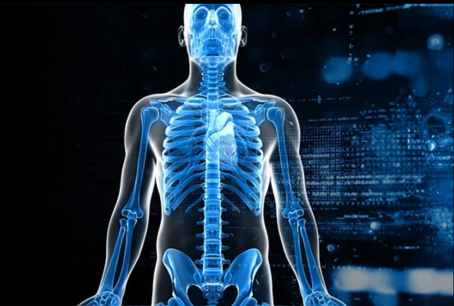
Digital Twins: Predicting Treatment Before It Is Given One of the long-standing challenges in clinical care is that treatments are developed using population averages, whereas real patients differ widely in age, physiology, and comorbidities. When starting therapy, clinicians often need to monitor and adjust treatment over time to find the most appropriate dose for an individual patient. We see the consequences across healthcare systems. Some hospital admissions occur not because a disease worsened, but because a medicine caused an adverse drug reaction. In many cases, clinicians are not making poor decisions; they are working with limited ability to predict how a specific individual will respond. Beyond the clinical danger, this also strains healthcare resources and delays effective treatment. The good news is that a new technological development, “the digital twins,” may begin to change this. Researchers are now building computer-based models that simulate how a specific patient’s body — or even individual organs and cells — may respond to treatment. Using clinical data, laboratory information, and biological characteristics, these virtual models allow scientists to test how a medicine behaves before it is given in real life. Instead of learning only after a patient reacts to a drug, healthcare may increasingly be able to anticipate those reactions. The significance is not only technological; it is clinical. If such tools become widely reliable, they could reduce trial-and-error prescribing, improve dosing decisions, and identify potential toxicity earlier. For medicines that carry higher risks — such as chemotherapy, complex chronic therapies, or treatments requiring careful monitoring — the potential impact is considerable. Developments like this are important because they point toward patient safety. Much of our work centres on strengthening how healthcare systems learn from real-world use of medicine: documenting adverse reactions, improving prescribing practices, and translating evidence into everyday care. Digital twin technologies reflect the same principle— using better information to prevent harm before it occurs. In essence, while pharmacovigilance often helps us learn from medicines after they are used, innovations such as digital twins can help healthcare providers learn before harm happens. While the technology is still emerging, it signals an important shift in medicine: moving from reacting to drug safety problems to predicting them. If successful, it could help clinicians choose therapies with greater confidence and allow patients to receive treatment that is not only effective but also safer. The promise is simple — a future where treatment decisions rely less on uncertainty and more on informed foresight. Although still in development and not yet part of routine clinical practice, these technologies signal a broader shift in healthcare — from reacting to treatment complications to anticipating them. Together with pharmacovigilance and careful prescribing, such tools may help clinicians make more informed decisions and improve patient safety.
Medicine Safety Insight
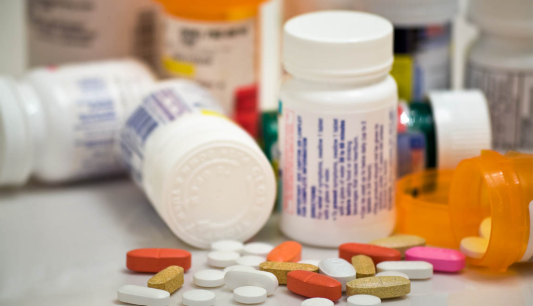
Why Medicines Can Harm the Kidneys The kidneys play a central role in removing many medicines from the body. When kidney function changes, drugs can accumulate to harmful levels even if the prescribed dose appears appropriate. In other cases, certain medicines directly affect kidney tissue, particularly when used for long periods or combined with other therapies. Problems often arise in routine clinical situations: a pain reliever added to multiple existing medicines, doses not adjusted for reduced kidney function, or interactions that increase drug concentration in the bloodstream. Because kidney injury is usually silent at first, patients may feel well while damage progresses. Medicine-related kidney injury, therefore, does not usually result from a single dramatic error. More commonly, it reflects gaps in monitoring, incomplete medication review, or delayed recognition of adverse drug reactions. Early consideration of medicines as a possible cause of clinical deterioration can allow clinicians to adjust treatment and prevent irreversible harm. Preventing these outcomes depends on careful prescribing, clear documentation, and routine review of therapy — ensuring that treatment remains both effective and safe for the individual patient.
Event Spotlight

World Kidney Day: Preventing Harm Before Intensive Care Observed each March globally Each March, the world observes World Kidney Day, drawing attention to the growing global burden of kidney disease. While public conversations often focus on dialysis and transplantation, an important and preventable pathway to kidney failure frequently begins much earlier: medicine-related kidney injury. Many kidney injuries do not begin with rare diseases. They begin with ordinary clinical situations — a pain reliever added to an already complex prescription, a missed drug interaction, an unadjusted dose, or an adverse drug reaction that goes unrecognised. These are not dramatic events; they are routine moments in healthcare. And when they are missed, the consequences accumulate slowly until the patient eventually presents with severe kidney damage. By the time intensive care is required, prevention has already been lost. At the Qua Pillar Health Research Foundation (QPHRF), our work focuses on stopping that trajectory early. We are a health research and capacity-building organisation dedicated to improving how medicines are used in real clinical practice across low- and middle-income settings, particularly in Africa. Our programs connect clinicians, pharmacists, researchers, regulators, and students around one central goal: patients should benefit from medicines without suffering avoidable harm. Kidney injury caused by medicines is one of the clearest examples of why this goal matters. Why Do Medicines Matter in Kidney Health? The kidneys process and eliminate many drugs from the body. When medicines are incorrectly dosed, combined in risky ways, or insufficiently monitored, the kidneys often become the first organ affected. What makes this dangerous is that kidney damage is usually silent. Patients may feel well while the injury progresses. This is why prevention is not simply a clinical preference — it is a necessity for patient safety. Our Approach: Alternatives to Intensive Care Our goal is upstream: strengthening the systems that prevent patients from needing intensive care in the first place. We support: 1. Pharmacovigilance — Learning from Harm Before It Repeats Through our pharmacovigilance trainings, professional workshops, and collaborations with healthcare institutions, we teach healthcare professionals how to recognise, document, and report adverse drug reactions. Pharmacovigilance is often misunderstood as paperwork. In reality, it is a patient-safety intelligence system. When adverse reactions are documented and analysed, patterns emerge. Those patterns help clinicians adjust prescribing practices, avoid risky drug combinations, and protect future patients. Simply put: every reported adverse reaction is an opportunity to prevent the next one. 2. Rational Medicine Use — Treating Without Creating New Illness A patient can receive the correct medicine and still be harmed if dosing, duration, or monitoring are inappropriate. Rational use of medicines is vital to ensure that medicines are prescribed only when necessary, in the right dose, for the right patient, with appropriate follow-up. In the context of kidney health, this matters enormously. Preventable drug-related kidney injury is not rare; it is often a systemic problem. When prescribing practices improve, kidney outcomes improve. The safest dialysis is the dialysis that never becomes necessary. 3. Clinical Responsibility and Team-Based Care Many medicine-related kidney injuries occur not because of a single error, but because responsibility is unclear. Who is monitoring? Who reviews the full medication list? Who recognises a reaction early? Our training emphasises shared accountability between doctors, pharmacists, nurses, and healthcare institutions. Better documentation, communication, and monitoring create safer care. Strong systems protect both patients and professionals. World Kidney Day reminds us that kidney health does not begin in nephrology clinics or intensive care units. It begins much earlier — in everyday prescribing decisions, medication monitoring, documentation, and communication among healthcare professionals. Dialysis and critical care remain essential and lifesaving, but they are responses to advanced disease. Preventing avoidable harm related to medicine ensures that fewer patients ever reach that stage. Improving how medicines are used is therefore not only a clinical priority, but a patient safety responsibility.
From the Foundation

From the Foundation Healthcare often celebrates its most visible victories — successful surgeries, new medicines, and lifesaving intensive care. Yet many of the most important successes in medicine are the ones no one notices. They are the complications that never occurred, the hospital admission that was avoided, and the patient who remained stable because a problem was recognised early. Across many health systems, patients are not only treated for disease; they are also exposed to risk from the very treatments meant to help them. Adverse drug reactions, inappropriate dosing, unrecognised interactions, and delayed monitoring contribute significantly to patient harm. In many cases, these outcomes are not caused by negligence or lack of knowledge, but by systems that make it difficult to use medicines optimally in busy, real-world clinical settings. This is why medicine safety and rational medicine use matter. The goal is not simply to prescribe more treatments, but to ensure that every treatment given provides benefit without avoidable harm. Achieving this requires more than guidelines. It requires documentation, communication, monitoring, and healthcare systems’ ability to learn from experience. At the Qua Pillar Health Research Foundation (QPHRF), our work focuses on strengthening that learning process — supporting pharmacovigilance, improving prescribing practices, and translating research evidence into everyday patient care. We believe that safer care does not begin in the intensive care unit; it begins much earlier, at the point where clinical decisions are made and recorded. The Pillar was created to contribute to this conversation. Each issue will explore how evidence, clinical practice, and patient safety intersect — from global health topics to emerging technologies and practical medicine use. Our aim is simple: to help healthcare systems not only treat illness, but prevent avoidable harm. Because in healthcare, the best outcome is often the one that never becomes an emergency. QPHRF Editorial Team